
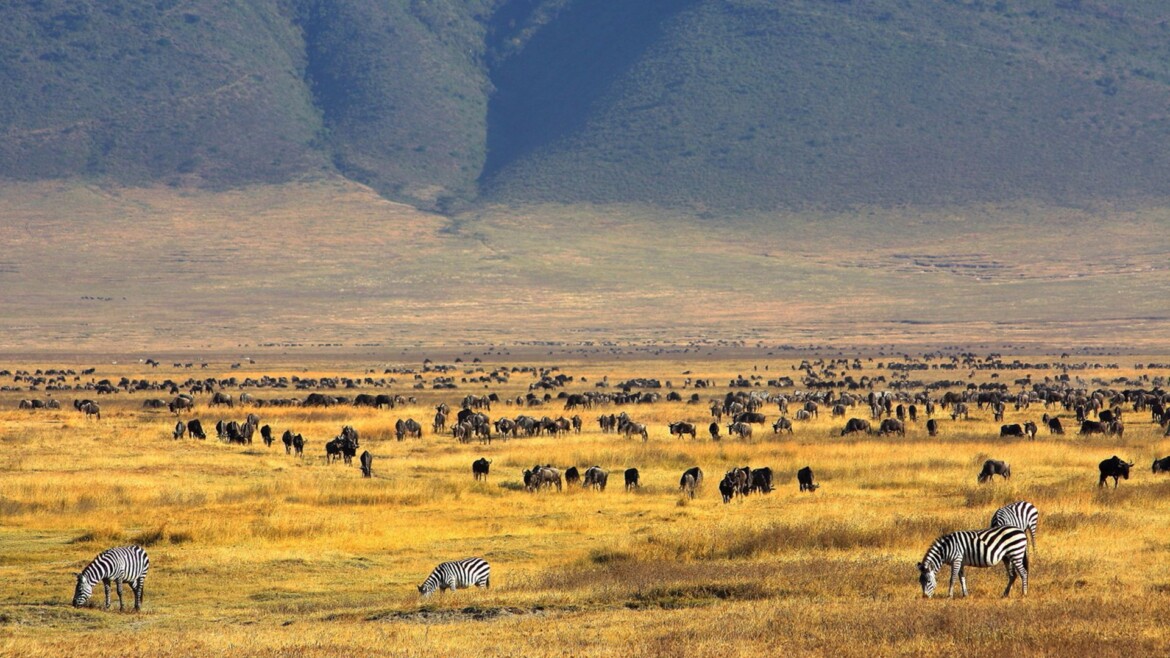
A Ngorongoro Crater safari is one of the most unforgettable experiences you can have in Tanzania. Declared a UNESCO World Heritage Site, this ancient collapsed volcano hosts one of the most extraordinary and intact ecosystems on the planet. The Ngorongoro Crater is often described as an “African Eden”, where incredible wildlife density, diverse habitats and breathtaking scenery come together in one natural wonder.
The Ngorongoro Crater: a unique ecosystem
The Ngorongoro Crater was formed around two million years ago by the collapse of a massive volcano. With a diameter of 19 km and a surface of over 260 km², it is the world’s largest intact caldera. Located at 2,200 meters above sea level, it contains a surprising variety of habitats: forests, lakes, swamps and grasslands that sustain thousands of species.

Read also: 👉 Ngorongoro: the crater where life reflects eternity
Ngorongoro animals: a memorable safari
A Ngorongoro safari means encountering one of the highest concentrations of wildlife in the world. Here you can spot lions, buffaloes, wildebeest, zebras, elephants, and many hippos. One of the most remarkable highlights is the presence of the rare and protected black rhino, which finds refuge inside the crater.
Thanks to its incredible biodiversity, Ngorongoro is one of the few places where you can spot the Big 5 in just one day of safari.
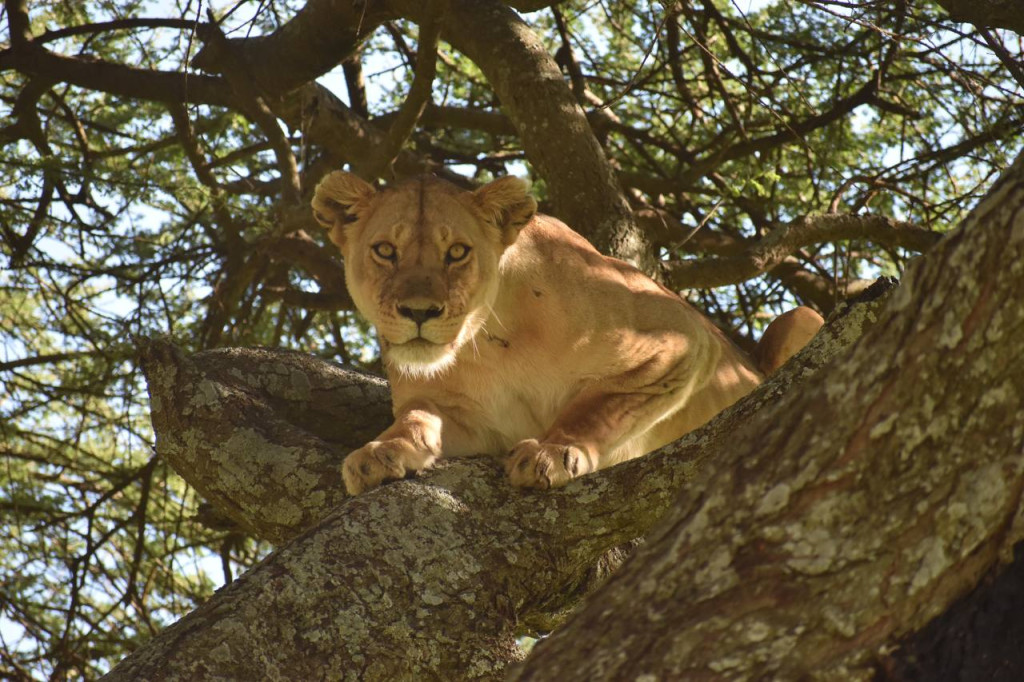
Read also: 👉 The big 5, the icons of the African savannah
Breathtaking landscapes and viewpoints
The beauty of the Ngorongoro Crater is not only about its wildlife but also about its landscapes. Green plains alternate with acacia woodlands and lush forests, while Lake Magadi shines at the center of the crater, often filled with flocks of pink flamingos. From the rim, perched over 2,000 meters high, the panoramic viewpoints offer spectacular vistas that leave visitors in awe.
Photographing the Ngorongoro Crater
For photography enthusiasts, the crater is a true paradise. Early morning and late afternoon light are perfect for capturing both wildlife and landscapes at their best. Besides large mammals, aquatic birds and the shifting colors of the vegetation also provide unique photo opportunities. A good telephoto lens is highly recommended to capture animals without disturbing them.

Read also: 👉 Photography in Serengeti and Ngorongoro
Practical tips for your Ngorongoro safari
- Visit duration: most safaris inside the crater last a full day, with regulated entry times.
- Best time to visit: the crater can be visited year-round, but the dry season (June to October) offers better visibility of animals. During the green season (November to May), landscapes are lusher and crowds are smaller.
- Safari options: you can choose a day trip or combine your visit with itineraries including Serengeti and Tarangire.
- Where to stay: lodges, tented camps and mid-range accommodations are available along the crater rim and in the nearby areas, suitable for every travel style.
Conclusion
A Ngorongoro Crater safari is a once-in-a-lifetime experience, combining the beauty of landscapes with the richness of African wildlife. Few places on Earth allow you to observe such a variety of animals in such a spectacular and pristine setting.
Visiting Ngorongoro means immersing yourself in a unique ecosystem where nature, wildlife and landscapes coexist in perfect balance. For an even more complete journey, pair your Ngorongoro visit with safaris in nearby parks such as Serengeti or Tarangire, and fully experience the wild heart of Tanzania.